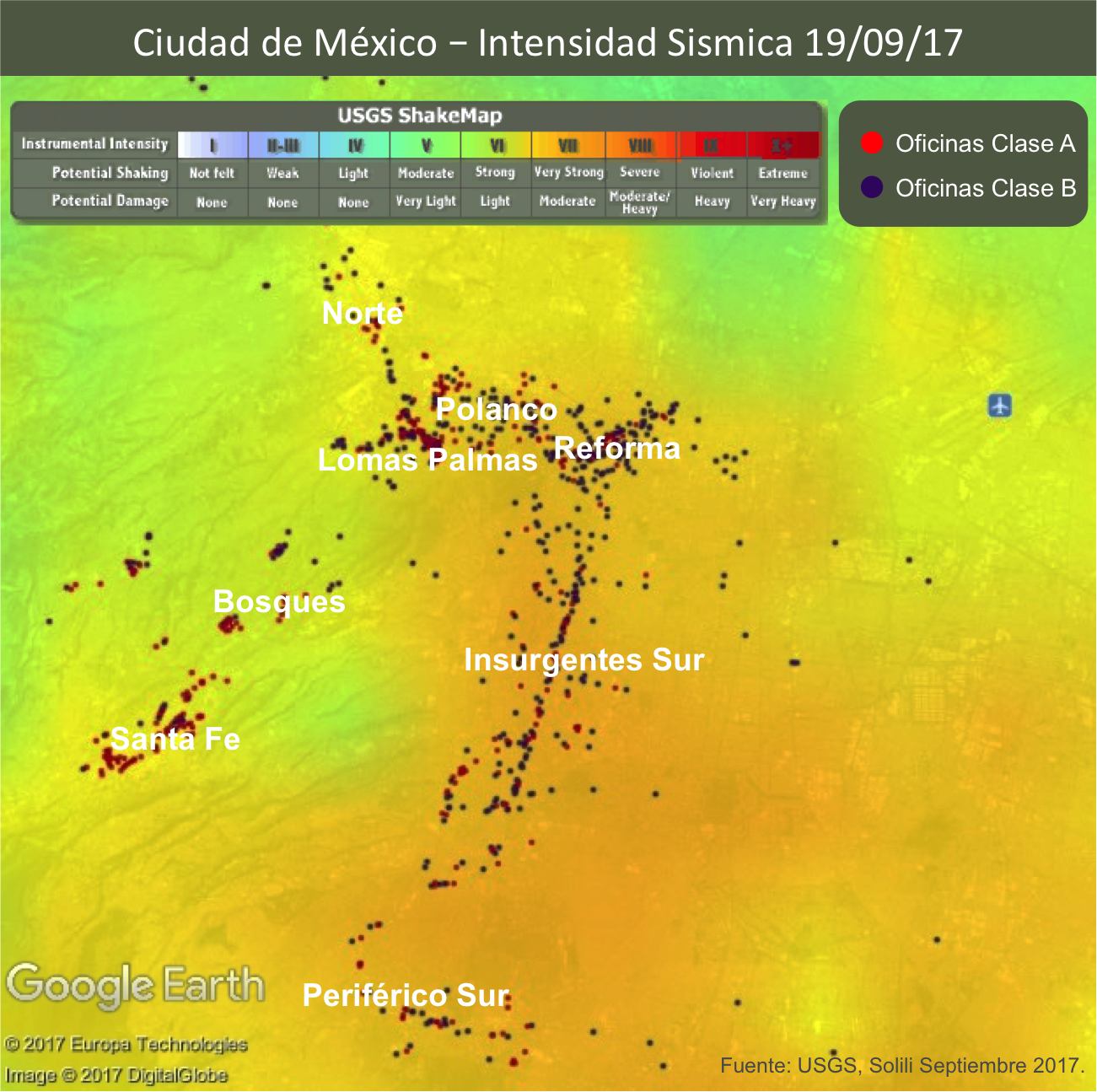
On September 19th, Mexico City was struck by a devastating 7.1 earthquake which collapsed several buildings and damaged thousands more. Class A office buildings were not compromised due to their high quality design and materials, however several Class B and C office buildings fell or were severely damaged. According to a report released by CBRE Mexico on September 27th, it is estimated that less than 10% of the Class B and C market suffered structural damage.
Demand for higher quality and modern Class A buildings has increased sharply due to the displacement of companies within the damaged buildings and an even greater amount of tenants lacking confidence in the structural integrity of their current Class B and C office space.
According to the United States Geological Survey, the earthquake was felt the most intense within the Insurgentes, Periferico Sur, Reforma and Polanco submarkets. These submarkets concentrate the majority of the buildings comprising the Class B office market.

Harold Murray, a senior managing director for the brokerage firm Newmark Knight Frank Mexico has received several urgent requirements for newer and higher-quality spaces, even from clients who only suspect possible damage to their buildings.
“The investment is worth it to avoid the risks we know to exist [...] it’s better to get all the assurance you can get." Murray said.
Fernanda Trillo, senior vice president at Coldwell Banker Commercial Mexico, stated that the increase in demand is equal among all classes of office properties, depending on the company's size and budget, as tenants were paying low rents in most of the damaged buildings.
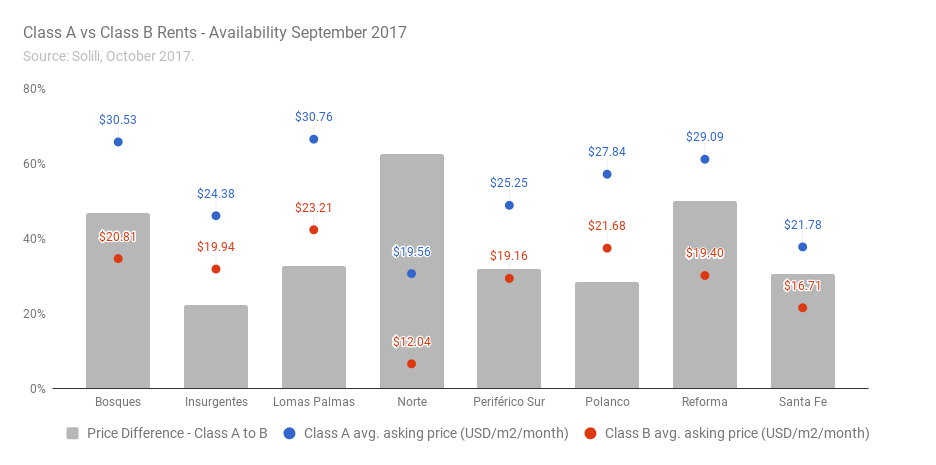
An analysis conducted by Solili shows that Class A asking rents in Mexico City are 25% more than those of Class B. However, within the Insurgentes submarket the difference is just 22%, while the Reforma and Norte submarkets is much greater at 50% and 62% respectively.
These variations in the difference in asking prices between Class A and B within submarkets are due to construction characteristics, location, and amenities. In Insurgentes, some Class B properties compete with Class A, explaining the compressed pricing difference. Contrasting this, the Norte submarket contains several new developments with high quality standards, generating a large gap between the two classes within the submarket.
Currency is also an important factor in the price difference as 87% of the Class A office space is currently marketed in U.S. dollars, while 65% of the Class B space is in Mexican pesos.
How impactful will this new demand be?
“The impact is obviously going to be positive, because we were expecting an important oversupply in the commercial real estate market starting next year, so we are going to be very balanced in that way, we should be able to fill in those spaces.” Trillo said.
For Murray, this unexpected rise in the demand should not present a deep impact on availability. “It is an unexpected increase in absorption, but how much it will be?, I can't say, but it will certainly give a small push. I don’t think this demand will impact prices yet, we should wait a few weeks and see if it impacts availability, then asking rents, but right now it is too soon to know”.
Stay up to date with the most important news to the real estate
Subscribe Solili Newsletter